If you are new to UK admissions, Clearing is the process universities use to fill undergraduate course places that remain after the main application round. Students use it when they miss their offer conditions, receive no suitable offer, apply late, or decide to look beyond a place they already hold. The university still reviews the student’s qualifications before making an offer.
Course vacancies can change quickly, while accommodation, CAS and visa timelines are already running. If Clearing could matter to your family, check the available courses now rather than planning around UCAS’s formal October closing date.
By results day, much of the main admissions round had concluded. UCAS figures released on 13 August showed that a record 262,820 UK 18-year-olds had secured a university place, 3% more than last year. UCAS said the increase was driven by the growing number of 18-year-olds in the population.
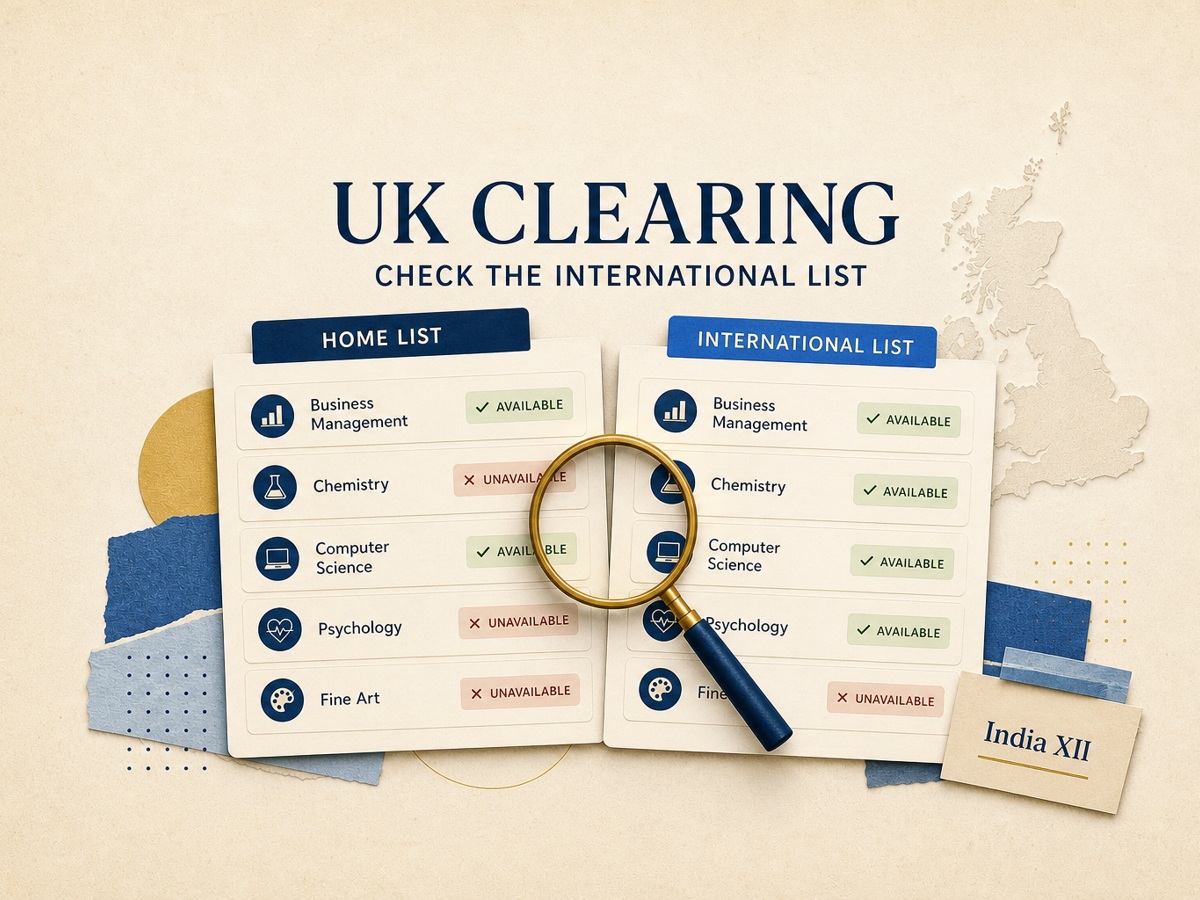
The same release pointed students who were still looking, had changed their plans or were applying for the first time to more than 26,000 courses in Clearing. That number is easy to misread because availability depends on the course, its entry requirements and whether the student is applying as a home or international applicant. At Liverpool, for example, the UK Clearing page said on 14 August that all places for UK and Republic of Ireland students had been filled. The international Clearing page was still inviting applications from students who had their results.
An Indian student relying on a UK-focused article, or looking only at the main Clearing page, could easily conclude that Liverpool was closed. A family could stop there and miss courses that were still open to the student.
What Liverpool was listing on 14 August
Clearing is often described as though every applicant is choosing from one common list. Liverpool’s separate international course list included courses in engineering, mathematics, chemistry, computer science and several other areas when I checked it on 14 August.
The page also gave India Standard XII requirements for each course. For example, it listed 60% for Civil Engineering BEng and 65% for Mechanical Engineering BEng. A listed percentage does not guarantee an offer. Subject requirements and English-language conditions still apply, the university will review the application, and vacancies can change quickly.
If you are applying from India, do not stop at the university’s main Clearing page. Find its international list and confirm that the course is open for your fee status and qualifications.
What else still needs checking
Results-day pressure makes almost any available place feel valuable. Families still need to ask the questions they would have asked before putting a university on the original list.
Start with the modules and assessment structure, especially if the Clearing option is a related course rather than the student’s first choice. Use the university’s Indian-board and subject requirements instead of trying to convert A-level grades yourself. The family should confirm the annual fee and any scholarship, then see whether the total cost is workable. The student should check professional accreditation where it matters. Accommodation needs attention at the same time.
Some of these deadlines arrive quickly. Surrey, for example, said Clearing students had to refer themselves through UCAS by 5 pm on 14 August and apply for accommodation by 5 pm on 17 August to qualify for its accommodation guarantee. That was Surrey’s timetable, and the first deadline has already passed. The formal UCAS Clearing closing date of 19 October is therefore a poor date around which to plan as a family.
If you already have a confirmed place
A student who holds a place can still explore Clearing after changing their mind. UCAS advises students to secure a new place before using “Decline my place”, because releasing the current place cannot be reversed. Speak to the new university first. Make sure it has reviewed the student’s actual qualifications and has given permission to add the course.
A student can collect more than one informal offer by phone, email or online chat. Only one Clearing choice can be entered in the UCAS Hub at a time, and adding it amounts to accepting that offer. Compare what each course involves and what it will cost before entering anything in UCAS.
Work backwards from the visa and arrival date
An international student still needs the university to confirm the place and issue a Confirmation of Acceptance for Studies, or CAS, before applying for a Student visa. The UK government says an application made outside the country usually receives a decision within three weeks, although an individual case can take longer.
Universities may also set their own final application, CAS or arrival dates. UCAS tells international advisers to check the university’s latest arrival date when applying later in Clearing. A place found in late September may be unusable once the university’s paperwork and the visa process are factored in, even though Clearing is technically open.
If a course is worth pursuing now, have the student’s final marks and English-language evidence ready, along with the passport and UCAS details. Ask the university about its CAS timeline and latest permitted arrival date during the first conversation. Travel plans should wait until the visa is issued, or be booked on terms that allow a change.
Who should look now
I would check Clearing this weekend if the student has no satisfactory place, missed an offer narrowly, received stronger results than expected, or is making a late UK application with final marks in hand. A student already holding a course they like does not need to start shopping simply because more options have appeared.
The live course list may contain a worthwhile alternative, including one an Indian applicant would not see on a UK-focused page. Before accepting, try to picture the same course without the rush of results day. The student should still want to study it, and the family needs to be comfortable with the cost. There also has to be enough time left for the formalities.
At AltView, we help Indian students and parents make sense of late UK options. If you would like help comparing a course with the student’s existing choices and checking the remaining timelines, you can book a discovery call.